Those Devilish Details – How To Make Your Trees Better

Americanelm7-16-17-1.jpg

You may remember this American elm, Ulmus americana, from a couple of months ago. I lifted it and put it directly into this neat funky Chuck Iker rectangle. It dutifully threw new shoots, and I wired an initial design. So far, so good.

Americanelm9-30-17-1.jpg

Here we are this morning. Very nice growth, as you can see. I recently pruned back the leader, as it had grown enough for this year. But now I have a lot of unruly branches that need attention. They say the devil’s in the details. They must have been thinking of bonsai when they came up with that one.

Now, how do you go about tackling the details that will take your tree to the next phase of development? Here’s a step by step illustration of my thought process and the results.

Americanelm9-30-17-2.jpg

I almost always begin at the bottom of the tree. In this case, the number one (lowest left) branch of the tree needs pruning. You can see in this closeup (just click on the image to enlarge it) that a secondary branch has emerged all on its own. Perfect. I can cut to this branch, and next year let it run before pruning it again.

Americanelm9-30-17-3.jpg

After pruning.

Americanelm9-30-17-4.jpg

My next stop is the branch above the number one branch. Why not the number two branch, the one on the right side of the tree? It’s not as thick as I need it to be (see two photos down). Pruning it back would not be the right thing to do at this time. You’ll commonly see this in the growth of your trees. Branches tend to grow with more strength in the apex. Branches also tend to grow with different degrees of strength in the same part of the tree. Part of developing your bonsai is to balance this growth by means of selective pruning.

Americanelm9-30-17-5.jpg

Branch pruned.

Americanelm9-30-17-6.jpg

This is the number two branch, the lowest right-hand branch. You can see that it’s not as strong/thick as the lowest left branch – in part because there are actually two branches emerging from the same spot. I needed a back branch, so kept them both.

Americanelm9-30-17-7.jpg

Now let’s move up the tree some more. This branch near the apex is way too strong (not surprisingly, apical dominance you know). It needs to be “cooled off.”

../wp-content/uploads/2017/09/Americanelm9-30-17-8.jpg

Cut back pretty hard..

Americanelm9-30-17-9.jpg

Now on to the other side of the tree. Same problem.

Americanelm9-30-17-10.jpg

I unwired it and pruned it back hard. That’s step one for this branch.

Americanelm9-30-17-11.jpg

Now I used the same wire to rewire the smaller branch I cut to into position.

Americanelm9-30-17-12.jpg

Now back to the other side of the tree. This branch needs to be pruned.

Americanelm9-30-17-13.jpg

Snip.

Americanelm9-30-17-14.jpg

Here’s that back branch I mentioned above. I don’t want this branch to get too thick, as it might cause undue swelling at the point on the trunk where they emerge. So I’ll prune it back.

Americanelm9-30-17-15.jpg

Snip.

Americanelm9-30-17-16.jpg

Back up higher in the tree, this branch is now obviously too heavy. I’d trimmed the secondary branches that emerged, but more needs to be done.

Americanelm9-30-17-17.jpg

Unwire and prune back.

Americanelm9-30-17-18.jpg

Now I’ve wired one of the secondary branches out as a new leader.

Americanelm9-30-17-19.jpg

And here’s the final result. This is a nice little American elm bonsai. The species grows so fast that by the end of the 2018 growing season, I should have a nicely filled out specimen.

Let me know what you think.

Small Change, Big Impact – And How To Hurry A Tree Along

Cedarelm8-26-17-2.jpg

I’ve been having a great time this year with Cedar elms (Ulmus crassifolia). I slip-potted this one last month, as part of my bound-and-determined campaign to develop this tree into a bonsai as quickly as I can. This is something I started doing almost 30 years ago, partly out of impatience and partly out of the desire to make a study of bonsai techniques to test limits.

This specimen has been “Cedar elm strong.” It came back from collection quickly and has grown with vigor since. It was four months from lifting to bonsai pot. Now, the main advantages of this specimen and others like it can be summed up as follows:

  • The species is naturally vigorous
  • The specimen has the appearance of age
  • The specimen has actual age
  • Slip-potting (or, though usually less desirable, direct-potting) can be done without fear of killing the tree
  • The specimen has good taper, with the trunk chop being small enough that the tapering transition can be pulled off in the pot and within two years

Given these features, I know I can cut out one or two years’ worth of development time. What this means is, if I were to have plodded along with this tree in accordance with conventional wisdom, it would still be in a nursery container putting on growth without my having done a thing to it besides water and feed. Only next year would I sit down and start the styling process. It would be another year before the tree went into its bonsai pot, and another couple of years before the tree could reach a “finished” (meaning showable) state. That’s a total of four years.

I am confident that I can reach the same degree of development in, at most, three years by being aggressive. So why wouldn’t I do that?

Cedarelm9-10-17-1.jpg

Here’s the tree today. I’ve had to unwire the leader, as it’s grown really well over the past month. My goal for today is to carve down the chop point (hurrying the tree along), and do some more work on the leader.

Cedarelm9-10-17-2.jpg


Here’s the result of today’s work. This only took me about 10 minutes. I’ve done some carving at the chop point, which enhances the taper from the trunk into what is going to ultimately be the crown of the tree. I’ve also taken the opportunity to cut back the leader to a side branch, which I’ve wired straight up. This is how you build an apex properly. I’ll let this leader grow on out for the remainder of the season, with the plan of cutting it back again just before the buds start swelling next spring. I should have the crown mostly built next year.


Now for the pop quiz. Are you able to see the small change I made today in this bonsai-to-be that makes a huge difference in its appearance? If you spotted the change in the planting angle, you got it right. Compare this photo with the first one above. When I first potted the tree, the more significant slant seemed like the way to go. It’s bothered me since, but I didn’t want to fool with the tree again so soon. The roots needed to firm up. By today they had, so I was able to manhandle the tree into a more upright stance. It makes a world of difference, doesn’t it?


How To Be Off And Running For Next Year

That time of year is soon upon us, where our trees are more or less done growing foliage and we need to think about what we have planned for them next year. Bonsai is in large measure a game of patience, but that doesn’t mean you can’t or shouldn’t plan ahead. And do certain things this year in preparation for next.

For me recently this has meant working on elms. As a family, elms for the most part can be worked on according to the following guidelines:

  • winter: lifting, chopping, dramatically root-pruning, wiring established trees;
  • spring: chopping, wiring, root-pruning, potting;
  • summer: wiring, potting, pruning, pinching;
  • fall: unwiring, light trimming, light pinching.

I try to take advantage of the entire growing season, based on where each of my trees is along its development path. With the elms below, I’m taking advantage of what will be our last round of growth for the 2017 growing season. By doing this, I’ll get a head-start on next year.

Cedarelm4-30-17-7.jpg

This is one of the Cedar elms (Ulmus crassifolia) I got from my friend’s parents’ property back in April. Nice trunk, nice taper, nice movement, nice bark. It had bonsai written all over it.

Cedarelm9-2-17-1.jpg

After a sluggish start, it took off and hasn’t stopped growing since. Time to make a move on this unbalanced growth while getting a bonsai-in-the-making on the bench.

Cedarelm9-2-17-2.jpg

That’s more like it! I needed to cool off that growth in the apex, or the lower branches were going to be weak going into 2018. That’s always risky with winter just ahead.

Cedarelm9-2-17-3.jpg

This Byron Myrick rectangle suits the tree very nicely. I basically slip-potted the tree, meaning I lifted it from its nursery container and with minimal disturbance to the roots set it in this bonsai pot. I filled in with fresh, well-draining bonsai soil mix and watered it in. This tree is going to be outstanding come next year.

Zelkova8-7-17-1.jpg

You don’t see Japanese gray-bark elm, Zelkova serrata, all that often. It’s a pity, as the species has a lot going for it. I got some stock plants for a fellow bonsai nurseryman, including a handful of larger ones. I chopped the trunk (which had been four feet tall) back to 12″, and as buds popped and grew into shoots started working on it. Because it had a significant root mass, the regrowth was natural as the tree was attempting to regain everything above ground that I was removing. This process has continued into and through summer.

Zelkova8-26-17-1.jpg

Compare this photo with the one above, which was taken in early August. That’s some fast development!

Zelkova9-2-17-2.jpg

Time to find out what Zelkova’s are made of. I cut off all the roots that wouldn’t fit in this Chuck Iker pot, and in the tree went! If it comes through okay, I’ll have a leg up going into 2018.

You’ll find, as you work with the various elm species, that some of them can take a lot of work throughout the growing season and won’t keel over from it. Based on my experience, the only ones I’d avoid doing “out of season” work on are Hackberry and Winged elm. For any of the others, have at it!

Cedar Elms Are Awesome – How To Beat Father Time

An old and dear bonsai friend invited me to his parents’ place in Texas earlier this year to collect Cedar elm, Ulmus crassifolia. Cedar elms are native to Texas, north-central Louisiana and southern Arkansas all the way to southwestern Tennessee. They’re called Cedar elm because they tend to grow in the same areas as the Ashe and other junipers, which are mistakenly called cedars. Anyway, the collecting trip was ideally going to happen in January or February, but scheduling put it off until April. April, you say? Well, I had the same thought but I couldn’t turn down the opportunity. I knew from past experience that Cedar elms are tough as nails, so I figured if any species would tolerate being collected out of season that would be it.

The trip took place on April 22nd, and as most of you know by now I had surprisingly good success. Most of the trees I brought home survived. Not only that, many have grown so strong that I’ve been able to go ahead and pot them. Here are two you’ve seen lately.

Cedarelm8-26-17-1.jpg
Cedarelm8-26-17-2.jpg

When you consider that each of these trees was collected on April 22nd, had budded a week later and had grown out sufficiently by August to make their way into bonsai pots – and not having skipped a beat growing all through that process – you’ve just got to admire this species.

Cedarelm4-23-17-1.jpg

This is one of those specimens you hope to find when you go collecting. Great radial roots, great taper in the lower trunk, great bark – it’s hard to go wrong when you start off with a piece of material like this. The trunk base is 3.5″ above the root crown.

Cedarelm4-23-17-2.jpg

Here it is potted up, with those radial roots buried good and deep to protect them. They can be revealed again later on, when it’s time to put this tree into a bonsai pot.

Cedarelm8-26-17-3.jpg

So here we are now. Can you believe the growth? Better still, it’s got shoots all the way up the tree right to the chop area, so that will save me a second chop when it comes time to carve the tapering transition either next year or in 2019.

As with any other specimen at this point, especially one with this much strong growth, there’s no reason not to go ahead and do the initial styling. That’s what I mean about beating Father Time. Normally you’d collect a tree one year, let it grow out that whole year, then next year do the initial styling and possibly go to a bonsai pot in year three. Given the inherent strength of Cedar elm, I can easily cut a year off my development process. Why wouldn’t I do that?

Cedarelm8-26-17-4.jpg

Here’s my first pass on styling this tree.

I’ve cut away a lot of growth that will not play a part in the finished design, and gone ahead and wired out what’s left. The leader needs to continue growing, in order to thicken the point where it emerges from the chop area. This tapering transition I’m going to create is vital to making this a believable bonsai.

If I rush this development technique, the tree won’t look right. It’s a common mistake bonsai enthusiasts make. So I’ll definitely avoid that.

Now that I’ve cheated Father Time, I do have to maintain my respect for him. Nothing more will be cut from this tree in 2017. It’s got a solid root system, and that needs to get fed going into late summer and then on to fall. I’ll probably have to unwire at least the leader by then, as it’s going to thicken quickly as fall approaches. But I’m prepared for that.

The bottom line here is this: as you gain experience with different species you’ll come to understand which ones can be hurried along. You’ll also be able to recognize the clues in their growth. In the case of these trees, it was strong growth along with the characteristics of the species that told me I could get away with more than I might otherwise.

Leave me a comment below and let me know what you think of the ever-awesome Cedar elm.

Bonsai Forestry – How To Make A Cedar Elm Group Better

Cedarelm4-30-17-11.jpg


I collected these Cedar elms with the idea in mind of making a forest planting with them. I had two pots of them, and figured on being able to make a five-tree forest.

Ultimately I decided they were better suited to making two three-tree groups. So I ended up with this composition as one of those bonsai-to-be.

All this is is the basic composition of the bonsai.

What does that mean?

With group plantings, the selection and placement of trees is extremely important. Spacing, trunk movement, trunk height, location of foliage, all of these factors go into making a believable forest. And when you’re working with only a few trees, each one becomes that much more important.

Cedarelm7-9-17-1.jpg

The first stage of making a bonsai out of these trees was completed with the planting itself. I could have wired the trees in advance of potting them up, but I knew their locations in the pot would dictate, at least in part, where the branches ended up going (and which branches I utilized). So I didn’t worry about any detailed styling at this point.

Cedarelm7-12-17-1.jpg

The next step came not too long after the first.

With a first round of wiring, the forest begins to come into focus. Now they’re not just trees with random growth. There’s planning that will lead to a naturalistic appearance.

Cedarelm8-17-17-1.jpg

Fast-forward about five weeks and here’s the current state of development. You can probably guess I left the composition alone. It has food, and the sun and water happened pretty much on its own (the latter since it’s rained every day for several weeks now). The trees are strong, and now it’s time for the next step.

Cedarelm8-17-17-2.jpg

Some trimming and wiring was all it took to continue the progress of this bonsai. Note that these trees were lifted from the ground on April 22nd. They had budded in a week, pushed a lot of growth by early July, and quickly became a small forest shortly thereafter. A month later I had a nice branch set on all of the trees, ramification on some, and the need to trim off excess growth. Not bad for such a compressed timeframe.

I don’t expect to do any more trimming on this tree for the remainder of the growing season. That time is now past. I will keep a close watch on the wire, as the coming fall will see biting on these trees and lots of others. Next spring, my design for this group will be well set, and I should be limited to grow and clip for detailed work.

If this forest bonsai speaks to you, it’s available at our Cedar Elm Bonsai page. I think it’s going to be an outstanding bonsai in just a couple of years.

How To Make Something From A “Lazarus” Tree

Once you’ve done bonsai long enough you will have killed your share of trees. We won’t go into all the causes, but it’s pretty much a given that sooner or later you’ll lose trees to weather or climate: weather from too much heat and not enough water or from freezing; climate when you try to grow a Japanese white pine in the Deep South (I gave that as an example because I did it early in my bonsai career); fill in the blank here ______ with your own tragedy.

Water-elm1-9-18-11.jpg


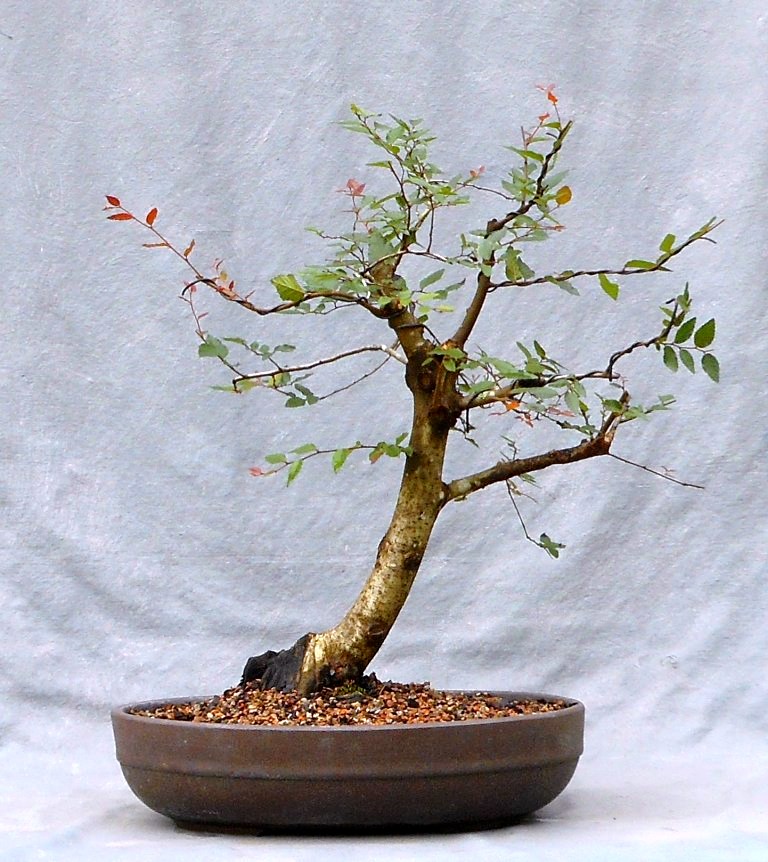
This Water-elm, Planera aquatica, was off to a good start as a triple-trunk specimen back in 2013.

Then came the winter of 2014 and that icy snowy freezing event I’ve written about before. Most of my Water-elms were killed dead as a doornail. A couple came through fine (one on the ground, the other in an oversized tub); a couple sprouted from the root base. This was one of the latter – a “Lazarus” tree, as it were.

There really wasn’t much left of it, but it went to all that trouble to stay alive so I decided to put it in the ground and see if I could grow it back out into something. That happened in 2014. True to its determination to stay alive, it continued its regrowth in the ground and I more or less ignored it while it did so.


This year I decided to lift the tree in order to see if I had anything worth working on. Here’s my initial effort.

As you can see, the tree has a nice broom-form structure that happened without any intervention on my part. That’s just the way it grew.

If you look more closely at the base, you can see that the regrowth occurred over/around deadwood that actually existed (at least partially) when I first collected the tree. This photo shows the shari at the base of the tree, which was a really neat feature. This wood is pretty solid, considering that it’s been in contact with the soil for many years.

Water-elm7-15-17-3.jpg
Water-elm8-12-17-1.jpg


Today I decided it was time to work on this specimen. I also needed to move it to a different pot, because the one I started it off in was too large and (to be honest) too expensive.

I did a lot of “editing” of the branch structure, removing superfluous branches that didn’t add anything to the design. I also did a little wiring and positioning of branches to fill out the tree. Once it gets some ramification going, I think it’ll be a pretty decent specimen, especially for a tree that nearly died.

The training pot it’s in now is in better scale with the tree. It may ultimately find its way into a handmade pot; time will tell.

For purposes of scale, the root base is 2.5″ across (including the dead wood), and the tree is 17″ tall.

Let me know what you think of this tree. It’s had quite a history in just a few short years.